Words, things & ideas posted as they’re discovered …
*
anomie
“social instability resulting from a breakdown of standards and values… also: personal unrest, alienation, and uncertainty that comes from a lack of purpose or ideals” (Merriam Webster)
What a depressing word. I read it twice in one night. The first time was in an SMH opinion piece by Jacqueline Maley about straight white men finding it difficult to get literary novels published (lots of articles about this lately):
The alienation of the straight white male – particularly the economically displaced working-class men who powered Donald Trump’s voter base – has self-fulfilling political power. The anomie and anger of these men are being expressed, just not in the novel.
The second time I read it was in another opinion piece about straight white men and their lit fic publishing problems — ‘The Vanishing White Male Writer’ by Jacob Savage — a piece that Maley referred and linked to in her article:
It’s no accident that 2024’s best book about millennial rage and anomie, Tony Tulathimutte’s Rejection, wasn’t written by a white man. A Thai-American author, Tulathimutte captures something genuinely tragic about how identities liberate and trap us—how the frameworks meant to explain our alienation often deepen it.
It’s an interesting article. Very frank. Recommend.
*
gibbous
I’ve heard this word before, in relation to the moon, but I didn’t know what it meant. Full moon? Crescent moon? Turns out that it means that most of the moon is visible and luminous, but not all of it: last stop before full moon.
Found in Lady’s Knight by Amie Kaufman and Meagan Spooner:
The moon was gibbous, its light filtering through the thinner trees that arched over the road, casting monstrous shadows onto the silvered dirt.
*
hentai
Hentai is “a genre of Japanese manga and anime characterized by overtly sexualized characters and sexually explicit images and plots” (Oxford Languages).
And now I know.
Found, yet again, in an Ali Hazelwood novel: Love, Theoretically. I love her. She’s so smart.
*
Heisenberg principle
“Formulated by the German physicist and Nobel laureate Werner Heisenberg in 1927, the uncertainty principle states that we cannot know both the position and speed of a particle, such as a photon or electron, with perfect accuracy; the more we nail down the particle’s position, the less we know about its speed and vice versa” (Caltech – very readable article: recommend).
I found this in Love, Theoretically by Ali Hazelwood. I come across heaps of new (often scientific) words/things when I read her books. But I don’t look them all up because reading flow.
The hero, Jack, talks to the main character, Elise, about the first time he saw her: at a family party, as his brother’s date.
Somene pulls Greg away before he has a chance to introduce me yet. But I watch her touch my grandmother’s Go board and pick up one of the stones the traditional way, index and middle finger. I watch her sneak a bite of cheese. At some point, I’m almost sure she says something that no one but me understands as a Heisenberg principle joke.
*
sectoral heterochromia
This is when part of your iris is a different colour to the rest of your iris. My younger brother has this (also his eyes are different colours—pretty cool).
I came across this in Love, Theoretically by Ali Hazelwood (which, I’ve just discovered, is her pen name). The hero, Jack, has heterochromia.
He’s still staring. At me. Stone faced. Intent. Sectoral heterochromic.
*
praetorianism
“Praetorianism means excessive or abusive political influence of the armed forces in a country. The word comes from the Roman Praetorian Guard, who became increasingly influential in the appointment of Roman emperors” (Wikipedia, 2025).
The Wikipedia article later notes that praetorianism is usually associated with small countries. Which, I suppose, is why it sounds like such a banana republic move.
I came across it in Tom Nichols’ 21 Feb 2025 article in The Atlantic, ‘A Friday-Night Massacre at the Pentagon‘, where he was describing the Trump Administration’s latest corrupt move: firing the chairman of the Joint Chiefs and the head of the navy (a Black man and a white woman respectively, by the way).
Now that Trump has captured the intelligence services, the Justice Department, and the FBI, the military is the last piece he needs to establish the foundations for authoritarian control of the U.S. government. None of this has anything to do with effectiveness, or ‘lethality’, or promoting ‘warfighters’, or any other buzzwords. It is praetorianism, plain and simple. [Emphasis mine].
🎁 The links above and here are accessible to all, not just Atlantic subscribers. (My subscription includes unlimited gift articles, but they expire after a few weeks.) If this link has expired, let me know in the comments, and I’ll provide a fresh one, if I’m still able.
*
zugzwang
(Pronunciation guide here.)
“Zugzwang (from German ‘compulsion to move’; pronounced [ˈtsuːktsvaŋ]) is a situation found in chess and other turn-based games wherein one player is put at a disadvantage because of their obligation to make a move; a player is said to be “in zugzwang” when any legal move will worsen their position” (Wikipedia, 2024).
This is the name of the New York chess club that offers Mal a fellowship in Check & Mate by Ali Hazelwood:
“Here’s the deal: I run a chess club. Zugzwang, in Brooklyn, over by—”
“I’ve heard of it.” Marshall might be the oldest, most renowned club in New York, but in the last few years Zugzwang has become known for attracting a less traditional crowd. It has a TikTok account that sometimes goes viral, community engagement, strip-chess tournaments.
*
Fantômas
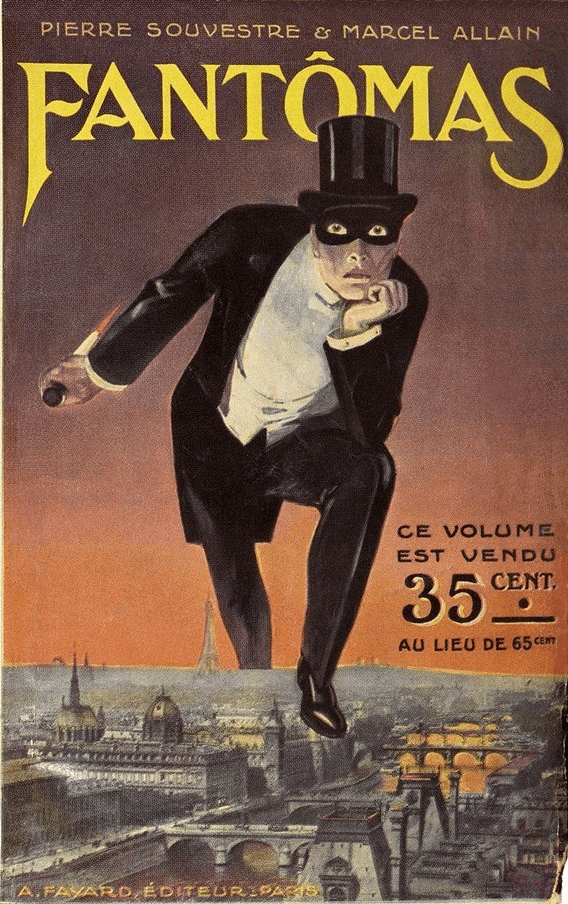
Fantômas is a very popular French supervillain character created in 1911. I learned about him when I went to the Magritte exhibition at the AGNSW. Magritte had a painting that was similar to this image, but in which Fantômas is holding a rose, rather than a knife. I was just interested to learn about this pop culture figure who is famous in France, like Sherlock Holmes or Moriarty, but whom I’d never heard of before. Also, he looks very cool.
*
Sabrina Fair
Sabrina Fair is the name of a Broadway play by Samuel A. Taylor which premiered on November 11, 1953, and ran for 318 performances (thanks, Wikipedia). It was made into a movie (Sabrina) twice: once with Audrey Hepburn and Humphrey Bogart (iconic) and once with Julia Ormond and Harrison Ford (not iconic). Yes, I have seen both films, but still didn’t realise that was what was being referenced in Check & Mate by Ali Hazelwood (p. 118):
“I’m Darcy. Like Mr. Darcy. And this is Sabrina. Like Sabrina Fair. Mal didn’t get a literary name because… we’re not sure, but I suspect that our parents took a look at her and decided to temper their expectations.”
Wikipedia also informs me that the title Sabrina Fair itself comes from a song in a masque—Comus (1634)— by John Milton. It quotes the lines, and I’m going to quote them too because they’re pretty:
Sabrina fair,
Listen where thou art sitting
Under the glassy, cool, translucent wave,
In twisted braids of lilies knitting
The loose train of thy amber-dropping hair;
Listen for dear honour’s sake,
Goddess of the silver lake,
Listen and save.
Sabrina is a water nymph who releases the virtuous Lady from captivity by her would-be seducer (Wikipedia, 2024).
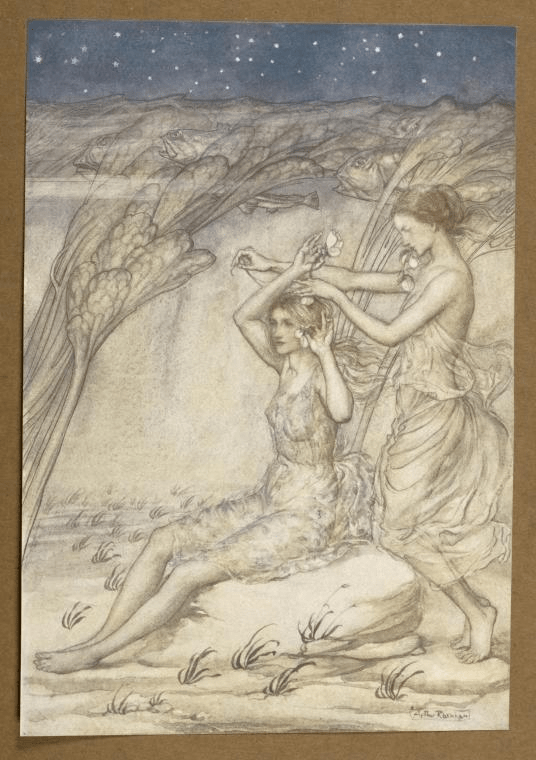
And, because I can’t help myself, below is an illustration of Sabrina (and attendant nymph) by famous Golden Age of Illustration artist, Arthur Rackham. It is a mystery to me why his name isn’t in the APA 7 reference provided by the NYPL, which I’ve captioned below. But look at it. The fish! The stars! You can see all Rackham’s illustrations from the book here (thanks, NYPL): be aware, though, that it is replete with half-naked nymphs.
*
Jungkook
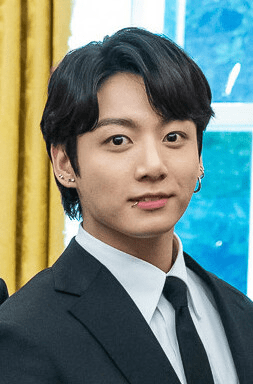
A (mononymous) singer in the famous K-pop band BTS (thanks, Wikipedia).
I read a reference to him (which I now can’t find) in Check & Mate by Ali Hazelwood. Essentially, the main character’s younger sisters enthusiastically welcome the male main character to their family home as if he were Jungkook.
> Image is in the public domain — click here for further details
Description: “President Joe Biden records a digital video with the K-pop singing group BTS on Tuesday, May 31, 2022, in the Oval Office of the White House.” (Official White House Photo by Adam Schultz) Image via Wikimedia.
*
parentified child
A parentified child is one who has had to take on an age-inappropriate ‘parental’ role in the family, due to an adult failure/incapacity to fulfil normal parental duties. For example a child might be responsible for smoothing over relationships between their parents, household management, or economic support, among other things. This often leads to the child extending that pattern into their adult life, feeling that they always have to look after others and not being able to recognise or extricate themselves from abusive relationships (Chandra, 2022).
I knew about this as a concept, but didn’t recognise the language when I saw it on an Instagram post by @jaimmykoroma, so I googled it.
Of course I know I was a parentified child who doesn’t deal with stress well.
*
Image by Наталия Когут used in accordance with the terms of the Pixabay content licence.

